Work boots are one of the main vectors of cross-contamination in the food industry. Every time an operator moves from a dirty area to a production area, the soles carry with them organic debris, pathogens or chemical residues that can compromise product safety. The real solution is to intervene at the point of access, before the problem enters. That’s what a boot wash station does.
What is a boot washing and disinfection station?
A washing and disinfection station is an automatic equipment that washes, brushes and/or disinfects the soles – and in some models the sides and shanks of the boots – at the point of access to the production area.
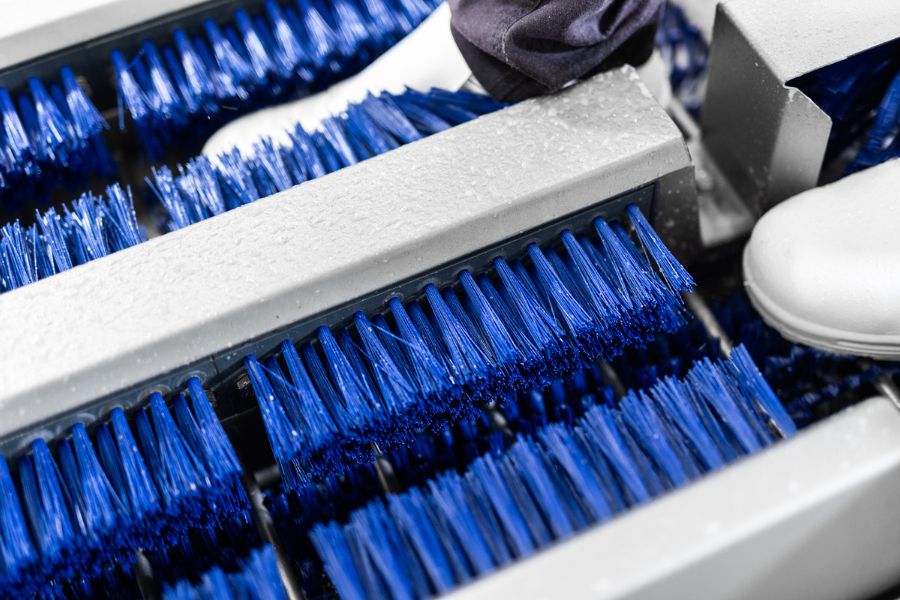
The cycle is simple: the operator walks on the hygiene station platform, photocells detect his presence and activate the rotating brushes, which mechanically remove dirt while soap is automatically dosed.
In the most complete models, the vertical brushes also clean the sides and shanks of the boots. The whole process takes between 4 and 10 seconds, after which the operator can enter the production area with clean and disinfected shoes.
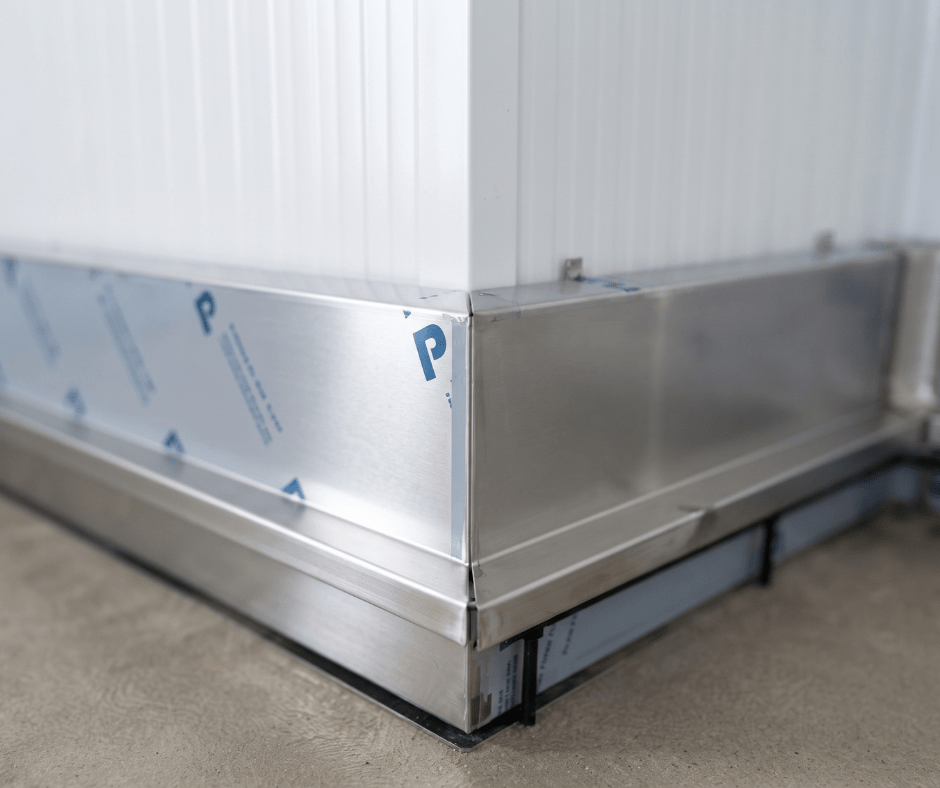
All models are manufactured in AISI-304 stainless steel, the standard in the food industry. Projects with more demanding requirements can opt for AISI-316 according to customer demand.
How is it different from a footbath?
The footbath is a static disinfectant bath: it wets the sole but does not remove dirt, as there is no mechanical action. The station cleans first and disinfects afterwards, which offers a much higher level of hygiene.
When is a boot wash station mandatory?
EC Regulation 852/2004 (Annex II, chapters I and II) requires adequate facilities for cleaning and disinfection of footwear in hazardous production areas. The regulation does not explicitly name this equipment, but it is what the auditors assume must be installed.
The sectors where it is mandatory practice: meat industry and slaughterhouses, cutting plants, dairy industry, fishing and aquaculture industry, fruit and vegetable industry and plants with differentiated high-risk areas.
Certifications that require it or value it positively: IFS Food, BRC/BRCGS, ISO 22000 and the HACCP plans of each company.
Types of boot wash stations
Sole washers (sole only)
Washes the bottom part of the boot with two horizontal rotating brushes and automatic soap dosing. Cycle of 4-5 seconds. Suitable for moderate risk areas or secondary access, and for standard safety footwear without high boots.
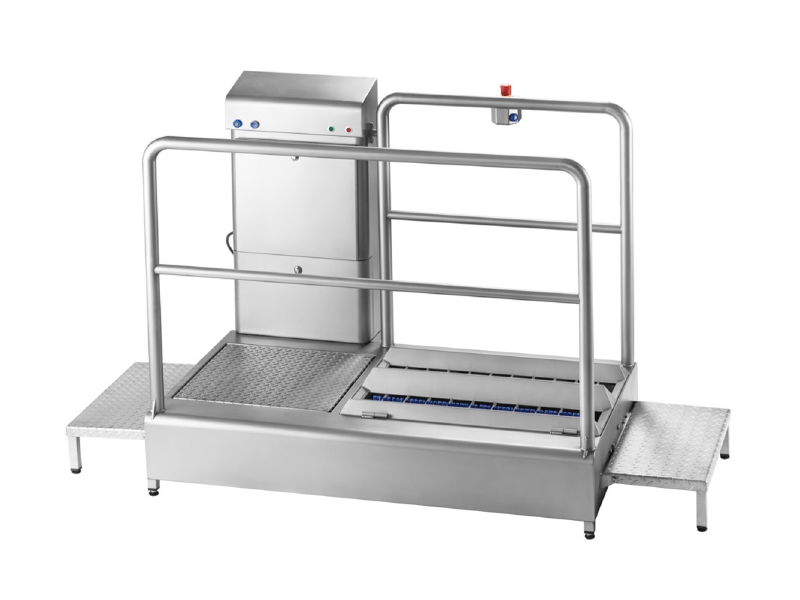
PASS-120 – 2 rotating brushes 800 mm, 4-5 second cycle. The most agile option for high volume access with standard safety shoes.
PASS-140 – Version with 1,000 mm brushes for greater passage width. Indicated when the footwear is wider or the flow of personnel requires greater lateral coverage.
Squeegee with side brushes (sole + sides)
Combines horizontal brushes for the sole with vertical brushes for the sides and shaft of the boot. Indispensable for high rubber boots, common in the meat and fishing industries or in humid environments. Cycle of 4-10 seconds depending on model.
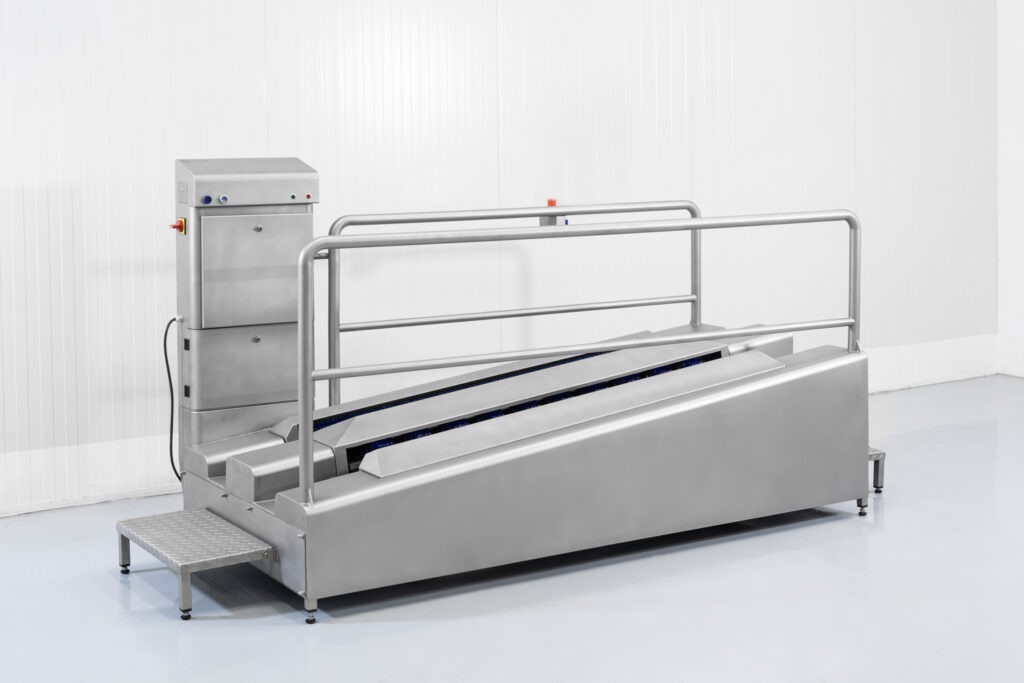
PASS-150 – 2 horizontal 400 mm brushes and 3 vertical rotating brushes. Complete cleaning of sole and sides in 4-5 seconds, suitable for mid-calf boots.
PASS-360 / 362 / 366 – 6 brushes for total cleaning of sole and sides of high boot, with 8-10 second cycle. Available in three lengths (800, 1,200 and 1,600 mm) to adapt to shoe size.
Integrated control and hygiene stations
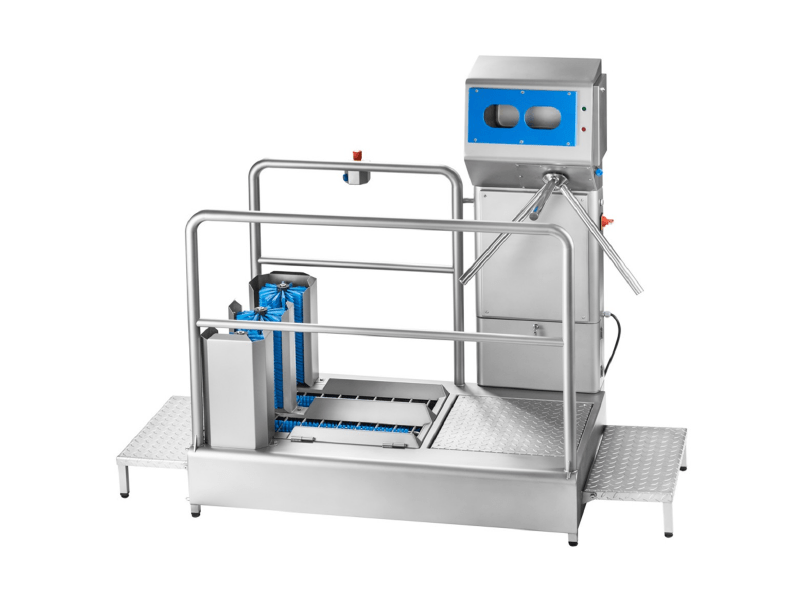
The most complete option for access to critical areas. They integrate hand washing or disinfection, sole washing and a physical barrier with turnstile that guarantees that no one can access without completing the hygiene cycle.
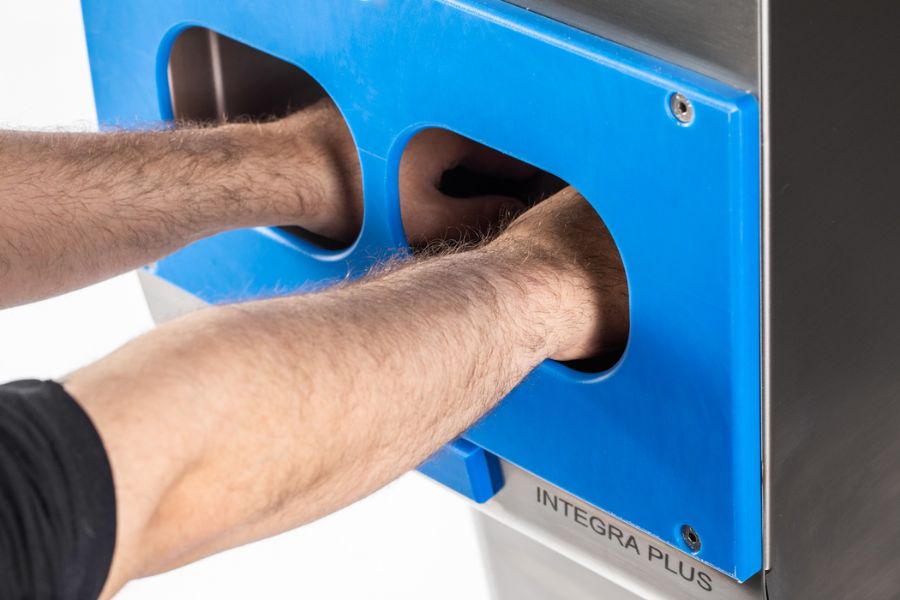
INTEGRA range – Automatic hand disinfection by photocells, sole washing and mandatory step turnstile in a single unit. Several models according to the level of shoe cleaning required (sole only, or sole + sides).
COMPACT Range – The most complete option: hand washing with running water, drying, hydroalcoholic disinfection, sole washing and turnstile, all integrated. Designed for accesses where the protocol requires the complete hygienic cycle without exception.
| Type | How clean | Indicated for | INOXSIS models |
|---|---|---|---|
| Basic floor cleaner | Sole | Moderate risk areas | PASS-120 / PASS-140 |
| Stave washer with sides | Sole + sides and shank | Meat and fish industry | PASS-150 / PASS-360/362/366 |
| Integrated station | Hands + sole + sides + shank + cane | Critical access, high risk | INTEGRA Range / COMPACT Range |
How to choose the right boot wash station?
- Risk level. High-risk areas require side brushes in addition to soles. For access to moderate areas, a basic sole washer is sufficient.
- Throughput volume. For large flows of workers (shifts of more than 20-30 people in a short time), short cycle models (4-5 sec.) are essential to avoid queues. Lathe models are slower but guarantee compliance without exceptions.
- Type of footwear. For high rubber boots (meat industry, fishing industry) requiring side brushes. Standard safety footwear can be coated with sole brushes.
- Mandatory access control. If you need to ensure that 100% of the personnel pass through the station (without the possibility of bypassing it), choose a model with a mandatory pass-through turnstile.
- Connection to running water. All models of boot wash stations require connection to running water. Although some equipment includes built-in tanks, these store only soap and disinfectant – the water for the wash cycle always comes from the mains. This is an aspect that needs to be planned for prior to installation.
Basic maintenance of a boot wash station
- Revision and replacement of brushes. The brushes are the part that accumulates the most wear, since they are in direct contact with the footwear in each cycle. Their useful life ranges from 6 months to 2 years depending on the volume of use of the installation. It is recommended to check them quarterly without waiting for the deterioration to become evident.
- Cleaning of the soap/sanitizer tank and piping. Soap and sanitizer can leave deposits in the tank and dosing lines over time, especially if the equipment has periods of low use. Emptying and rinsing the entire circuit once a month prevents blockages in the dispensers and ensures that the product reaches each cycle correctly.
- Revision of photocells and sensors. The photocells are responsible for detecting the presence of footwear and activating the cycle. If the lens is soiled by splashes of water or soap, it can cause the equipment not to activate when it should, or on the contrary, to activate without anyone being present. Periodic cleaning with a dry cloth is sufficient to keep them in good condition.
- AISI-304 stainless steel structure. Unlike other materials, AISI-304 stainless steel does not require additional treatments to withstand the constant humidity, industrial detergents and CIP cleaning processes common in the food industry. This simplifies the structural maintenance of the equipment and extends its service life without special interventions.
Which boot wash station does your plant need?
The boot washing station is the standard equipment in any food plant with differentiated production areas. Its real efficiency comes from the fact that it does not depend on the operator’s memory or will: the process is automatic and occurs at every access. The choice of model depends on the level of risk, the type of footwear and whether the protocol requires a mandatory physical barrier.
INOXSIS manufactures the PASS range of industrial boot washers in AISI-304 stainless steel, designed for the food industry. If you do not know which model best suits your installation, our technical team can help you choose.
Check out the PASS range of industrial boot washers →
Discover the integrated hygiene and control stations →
Frequently Asked Questions
What is the difference between a boot wash station and a footbath?
The footbath applies disinfectant to the sole without mechanical action. The washing station physically removes dirt with brushes before disinfecting, offering a much higher level of hygiene.
Is it mandatory in the food industry?
EC Regulation 852/2004 requires facilities for cleaning and disinfection of footwear in hazardous areas. In practice, this is the standard that IFS, BRC/BRCGS and HACCP audits expect to meet.
How often should the brushes be changed?
Between 6 months and 2 years depending on the volume of use. Quarterly review recommended.
How long does the wash cycle take?
Basic squeegee: 4-5 seconds. With side brushes: 8-10 seconds. Integrated stations with winch: 10-20 seconds.